Table of Contents
- Introduction
- Understanding Utah Weather and What It Does to Your Siding
- How a Proper Exterior Siding Maintenance Routine Works
- The Benefits of Consistent Exterior Siding Maintenance
- Related Insights and Resources
- Common Maintenance Mistakes to Avoid
- When Should You Speak With a Professional?
- Conclusion
- Frequently Asked Questions
Key Takeaways
- Utah's extreme temperature swings, intense UV exposure, and occasional moisture events create specific challenges for exterior siding that require a year-round maintenance approach.
- Routine exterior siding maintenance involves seasonal cleaning, visual inspections, caulking checks, and timely repairs to any compromised areas.
- Different siding materials respond to Utah weather conditions in different ways. Understanding your siding type helps you apply the right maintenance strategy.
- Catching minor issues early, such as small cracks, faded sealant, or loose boards, prevents far more significant and costly weather siding damage over time.
- Professional siding assessments are worthwhile after storm events, before resale, or any time damage appears to extend beyond a surface level.
Introduction
Exterior siding maintenance in Utah requires a targeted approach because the climate here is genuinely demanding. St. George homeowners face intense summer UV radiation, dry winters, and seasonal temperature fluctuations that can stretch and contract siding materials in ways many other climates simply do not. To maintain exterior siding effectively, the key is regular inspection, timely cleaning, and proactive attention to any early signs of wear before minor issues become major problems. For homeowners wanting to ensure their exterior siding holds up well across every season, a consistent maintenance routine is the most straightforward protective measure available.
This guide walks through the specific challenges Utah weather presents for siding materials, the practical steps involved in a solid maintenance routine, and the situations where professional expertise is worth arranging.
Understanding Utah Weather and What It Does to Your Siding
St. George sits in Utah's high desert, which gives it a climate quite different from much of the country. Summers are hot and intensely sunny. Winters are mild by Utah standards but still bring occasional frosts and periodic moisture. Spring and autumn can bring rapid temperature shifts within a single day.
These combined conditions create a range of challenges for exterior siding:
UV Exposure and Fading
St. George receives more sunlight than most US cities. Prolonged UV exposure causes paint and sealants to fade, chalk, and eventually crack. This is not merely a cosmetic issue. Once the protective coating breaks down, the material underneath becomes vulnerable to moisture infiltration and temperature stress.
Thermal Expansion and Contraction
Siding materials expand in heat and contract in cold. In a climate with high summer temperatures and cooler nights, this cycle happens repeatedly. Over time, the cumulative movement can cause caulked joints to separate, fasteners to loosen, and boards to warp or cup. This is one of the most common sources of weather siding damage in the region.
Dry Air and Moisture Events
Utah's low humidity means timber-based siding can dry out and crack if not properly sealed. Conversely, when monsoon moisture arrives in summer or rain comes in cooler months, dry cracked siding can absorb water rapidly. That moisture cycle encourages rot in timber products and can cause paint to blister and peel from vinyl or fibre cement siding.
Wind and Dust
St. George and the surrounding region experience periodic wind events, which carry fine dust and sand. Abrasive particles gradually scratch and erode surface finishes over time, particularly on the windward faces of the home.
Understanding these specific threats is the foundation of any sensible exterior siding maintenance plan. Maintenance practices that work well in a humid coastal environment may need adjustment for Utah's conditions.
How a Proper Exterior Siding Maintenance Routine Works
A well-structured maintenance approach does not need to be complicated. It does, however, need to be consistent. The following practices form the core of effective siding care in Utah.
Twice-Yearly Cleaning
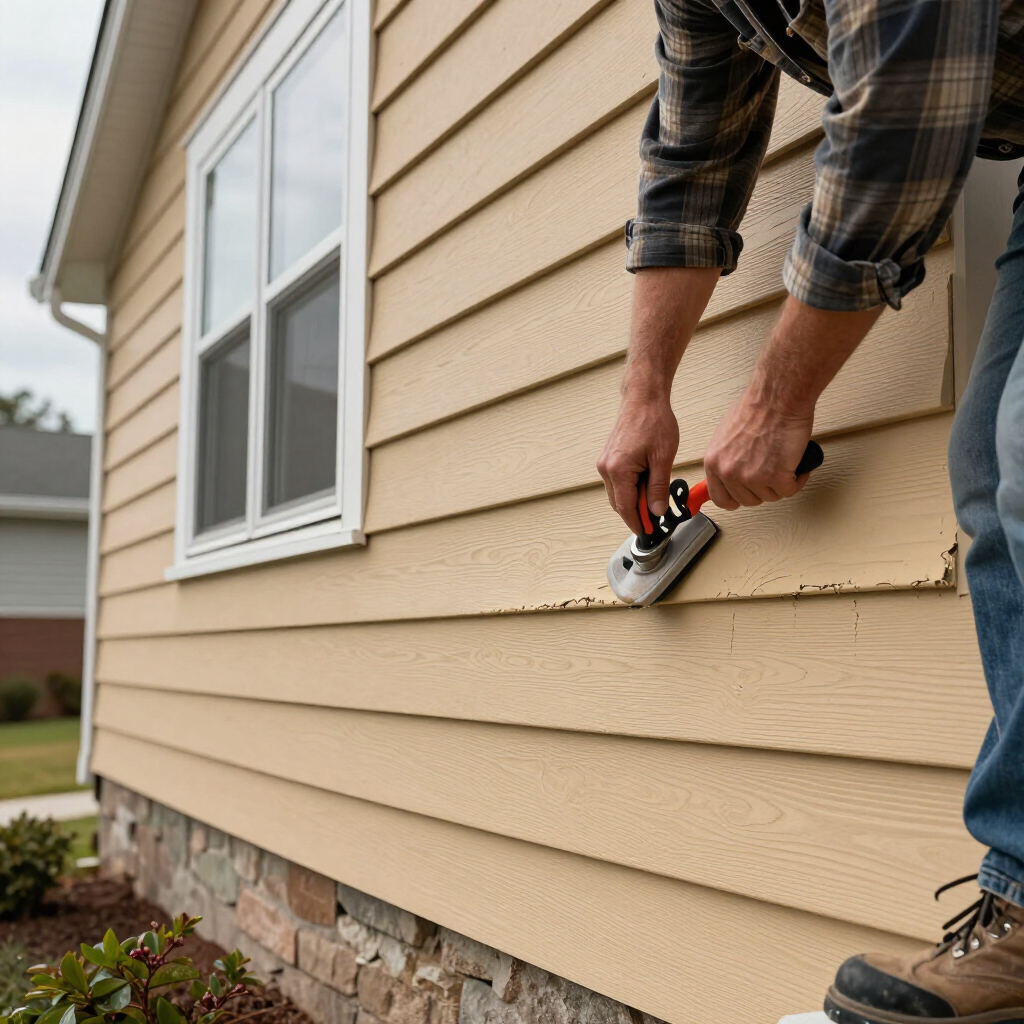
Siding should be washed at least twice a year, ideally in spring and late autumn. For most siding types, a gentle wash using a garden hose and a soft-bristle brush with a mild detergent solution is sufficient. Power washing can be used but requires care. Excessive pressure or directing the stream upward behind lap siding can force water into the wall cavity.
Cleaning serves two purposes beyond appearance. It removes accumulated dust and grime that can trap moisture against the surface, and it gives you an opportunity to conduct a close visual inspection of the material's condition.
Seasonal Visual Inspections
Walk the perimeter of your home at the start of each season with your eye on the siding. Key things to look for include:
- Cracks, splits, or gaps in individual boards or panels
- Blistering, peeling, or chalking of the paint or surface coating
- Separation of caulking at seams, corners, or around window and door frames
- Warping, cupping, or bowing of boards
- Staining, discolouration, or soft spots that may indicate moisture intrusion
- Loose fasteners or boards that have pulled away from the structure
Caulking and Sealant Maintenance
Caulking is one of the most overlooked but important elements of exterior siding maintenance. In Utah's climate, the repeated thermal movement of siding materials means caulked joints are under constant stress. A sealant that was perfectly applied five years ago may now be cracked, shrunken, or pulling away from the substrate.
Check all caulked joints during your seasonal inspection. Any areas where the sealant has separated or cracked should be cleared out and re-caulked using a high-quality exterior-grade product suited to the temperature range. This is an inexpensive task that prevents a great deal of moisture-related weather siding damage.
Repainting and Refinishing
In St. George's high-UV environment, exterior paint tends to degrade faster than in more temperate climates. A rough rule of thumb is to expect to repaint timber siding every five to seven years, though the actual interval depends on the paint quality, sun exposure of each face of the home, and how well previous coats were applied.
Fibre cement siding holds paint longer but still requires attention when the coating shows signs of wear. Vinyl siding typically does not require painting but benefits from thorough cleaning and occasional treatment with a UV-protective coating.
Vegetation and Landscape Clearance
Plants, shrubs, and trees growing close to your siding can trap moisture against the surface and provide pathways for pests. Keeping vegetation trimmed back at least thirty centimetres from the siding line is a simple but genuinely effective preventive measure.
Post-Storm Checks
After any significant wind, hail, or rain event in St. George, conduct a prompt check of your siding. Even small hail can chip paint or crack certain siding materials. Identifying and addressing damage quickly reduces the risk of moisture entering the wall assembly before the next weather event arrives.
The Benefits of Consistent Exterior Siding Maintenance
It can be tempting to treat siding maintenance as something to think about when problems become obvious. The reality is that consistent upkeep provides benefits that far outweigh the effort involved.
Extended Siding Lifespan
Well-maintained siding can last considerably longer than neglected material of the same type. For timber siding especially, regular painting, sealing, and caulking maintenance can add many years to its functional life by preventing the moisture intrusion that causes rot.
Sustained Curb Appeal
Siding that is clean, evenly finished, and free of visible damage reads as a home that has been cared for. In St. George's competitive property market, that impression matters both for everyday enjoyment and for resale potential.
Energy Efficiency
Gaps in caulking and cracks in siding allow conditioned air to escape, which places additional load on your heating and cooling system. In Utah's extreme summers and cool winters, maintaining a tight exterior envelope has a real impact on energy costs over time.
Avoiding Major Repairs
The most compelling case for regular exterior siding maintenance is financial. A minor caulking repair costs very little. Replacing a section of rotted wall cladding, together with the affected framing and insulation, is an entirely different budget conversation. Consistent maintenance keeps small problems from becoming large ones.
Related Insights and Resources
Siding maintenance does not exist in isolation. It connects directly to the broader performance of your home's exterior envelope, which includes roofing, window frames, trim, and any flashing details.
A common misconception is that new siding installation requires little ongoing attention in the early years. In fact, the first year or two after installation is an important period for siding because materials settle and caulk joints experience their first full cycle of thermal movement. A post-installation inspection in the second year can catch any early issues before they become established.
Another area worth understanding is the relationship between siding type and maintenance frequency. Cedar and redwood timber sidings offer natural beauty but require more consistent attention than engineered timber or fibre cement. Vinyl siding demands the least maintenance of common options but is not entirely maintenance-free, particularly in Utah's UV-heavy environment.
Homeowners who are considering upgrading or replacing their current siding may find it useful to understand how different products perform in Utah's specific climate before committing. For a broader view of siding options available in the St. George area, the team at A & L Finish Carpentry, LLC can provide guidance on material choices that balance aesthetics, durability, and maintenance practicality.
Trim and fascia details deserve equal attention during any maintenance inspection. These elements are frequently exposed to weather at joints and transitions, and they are often the first places where paint failure or moisture intrusion shows up. If you are exploring the full range of exterior carpentry services in the region, it is worth reviewing A & L Finish Carpentry's complete exterior services to see how siding care connects to the wider exterior picture.
Common Maintenance Mistakes to Avoid
Even homeowners with the best intentions can inadvertently cause more harm than good with siding maintenance. These are the most common errors worth being aware of:
- Pressure washing at too high a setting. This can force water behind the siding and damage the surface texture of fibre cement or softwood products. Keep pressure moderate and direct the spray downward with the siding profile.
- Painting over failing paint without adequate preparation. Applying new paint over chalking, peeling, or poorly bonded old coats will result in a finish that fails quickly. Surface preparation determines paint longevity more than product quality.
- Using interior-grade caulks on exterior joints. Exterior caulk is formulated to handle UV exposure and temperature movement. Interior products will crack and fail rapidly in St. George's conditions.
- Ignoring the north-facing walls. Homeowners tend to inspect the most visible elevations. Shaded walls can accumulate mildew and algae without attracting as much visual attention, particularly in wetter months.
- Delaying repairs once damage is spotted. A cracked board that looks minor today can allow significant moisture infiltration over one wet season. Prompt action on any identified damage is always the more cost-effective approach.
- Letting mulch or soil contact the base of the siding. Ground contact accelerates moisture absorption and rot in timber-based siding. Maintaining a clear gap between the finished ground level and the lowest edge of the siding is an important preventive measure.
When Should You Speak With a Professional?
Routine cleaning and visual inspections are well within the capability of most homeowners. There are situations, however, where engaging a professional is the more sensible approach.
If your inspection reveals soft spots, discolouration that penetrates beyond the surface, or areas where the siding material has visibly deteriorated, that warrants a professional assessment. These signs may indicate moisture infiltration into the wall assembly, which requires careful investigation before any surface repairs are attempted.
Following significant storm events, particularly those involving hail or high winds, a professional inspection can identify damage that is not obvious to an untrained eye. Hail impacts, for example, can compromise the surface integrity of fibre cement panels without creating immediately visible cracks. A professional will know what to look for at each material type.
If your siding is approaching the end of its expected lifespan, or if you are planning to sell your home and want an accurate picture of the exterior's condition, a professional assessment provides useful clarity. A qualified carpenter can distinguish between sections that require straightforward maintenance and those that are candidates for replacement.
Homeowners undertaking any repair work that requires removing and replacing boards should also consider whether professional involvement makes sense. Siding installation and repair involves flashing, moisture barriers, and fastening details that affect long-term performance. Getting these elements right matters far more than the surface finish alone.
Conclusion
Maintaining exterior siding in Utah's climate is less about dramatic interventions and more about consistent, attentive care across the seasons. The particular challenges of St. George, including intense UV radiation, thermal cycling, dry conditions punctuated by periodic moisture, and abrasive wind, mean that siding maintenance here requires a slightly different emphasis than in more temperate environments.
A reliable routine built around twice-yearly cleaning, seasonal inspections, prompt caulking repairs, and timely refinishing will keep most siding types performing well for the long term. Catching weather siding damage in its early stages is invariably simpler and less costly than addressing the consequences of deferred maintenance.
For St. George homeowners, understanding the specific demands your climate places on exterior materials is the foundation of a sensible maintenance approach. Your siding is your home's first line of defence against the elements, and the effort invested in looking after it is effort that protects the broader structure beneath.
Questions About Exterior Siding Maintenance or Repair in St. George?
If your siding inspection has raised questions you are not sure how to answer, or if you have identified damage that goes beyond routine maintenance, the team at A & L Finish Carpentry, LLC works with St. George homeowners to assess exterior siding conditions, carry out repairs, and advise on replacement options where appropriate. With direct experience working on St. George properties across different siding types and construction ages, the team understands the specific demands Utah's climate places on exterior materials. Reach out on
435-429-1231 or contact the team at
alfinishcarpentry@gmail.com to discuss your exterior siding needs.
Frequently Asked Questions
How often should we be cleaning our exterior siding in St. George's climate?
Twice yearly is a practical baseline for most St. George homes. Spring cleaning removes winter grime, while a late-autumn wash clears the dust and residue that accumulates through the hotter months.
Can we perform exterior siding maintenance ourselves, or do we need a professional for most tasks?
Cleaning, basic inspections, and caulking top-ups are well within DIY reach. Professional help is advisable when you find evidence of moisture damage, need repainting, or are replacing boards.
What are the early warning signs that our siding has sustained weather damage beyond normal wear?
Soft or spongy spots, interior wall staining, visible mold near siding joints, peeling paint that keeps returning, or boards that visibly bow are worth investigating with a professional assessment.
Does the type of siding on our home affect how we should approach maintenance in Utah's climate?
Yes, significantly. Timber siding needs sealing and regular repainting. Fibre cement is more durable but still needs paint maintenance. Vinyl needs less care but benefits from UV-protective cleaning in St. George's intense sun.
How do we know if our siding needs full replacement rather than ongoing maintenance?
Widespread rot, persistent moisture infiltration despite repairs, significant structural movement, or siding approaching 30 or more years of age may indicate replacement is more cost-effective than continued maintenance.