Table of Contents
- Introduction
- What Custom Trim Work Typically Costs
- The Four Factors That Drive Trim Pricing
- Common Types of Trim and How They Compare
- How Trim Affects a Home's Appearance and Value
- Getting an Accurate Estimate for Your Project
- Conclusion
- Ready to Put Real Numbers to Your Trim Project?
- Frequently Asked Questions
Key Takeaways
- Most custom trim projects in St. George fall somewhere between $6 and $20 per linear foot installed, though intricate designs and premium woods can run higher.
- Material choice is the biggest cost swing. MDF sits at the low end, while hardwoods like oak, alder, and walnut cost noticeably more.
- Labor usually accounts for 40 to 60 percent of the total, and detailed profiles or older homes with uneven walls take more time to install.
- Trim is one of the more affordable ways to change how a home looks and feels, and quality work tends to hold up well when a house goes to market.
- A written estimate that breaks down materials, labor, and scope is the most reliable way to know what your specific project will cost.
Introduction
Custom trim work in St. George, Utah usually costs between $6 and $20 per linear foot installed, with simple MDF baseboards at the low end and detailed hardwood crown molding or built-up casings at the top. A whole-home trim package for an average house often lands in the $3,000 to $12,000 range, depending on the size of the home and the level of detail you want.
Those are wide ranges, and there is a reason for that. No two trim projects are alike. The wood you pick, the profiles you choose, the condition of your walls, and the skill required for the installation all move the number up or down. If you are planning a remodel or building new in Washington County, understanding what sits behind the price makes it much easier to compare bids and avoid surprises.
This guide walks through the factors that shape custom trim pricing in the St. George area, the common trim types you will run into, and what to ask for when you request an estimate.
What Custom Trim Work Typically Costs
Trim pricing is almost always quoted per linear foot, which covers both the material and the labor to install it. Here is how the ranges tend to break down in Southern Utah:
- Basic baseboards (MDF or pine): roughly $4 to $8 per linear foot installed
- Door and window casings: roughly $6 to $12 per linear foot
- Crown molding: roughly $8 to $16 per linear foot, more for multi-piece designs
- Hardwood or specialty profiles: $15 to $25+ per linear foot
A single room refresh might cost a few hundred dollars. A full main floor with baseboards, casings, and crown can climb into the thousands. These figures are general market ranges, not quotes, and local prices shift with lumber costs and demand.
Why Per-Linear-Foot Pricing Can Be Misleading
Two bids at the same per-foot rate can still produce very different totals. One carpenter may include caulking, filling nail holes, and prep in the price. Another may list those as separate line items. Always read the scope, not just the rate.
The Four Factors That Drive Trim Pricing
1. Material Selection
Material is where budgets stretch or shrink the fastest. MDF (medium-density fiberboard) is smooth, stable, and inexpensive, which makes it a common pick for painted trim. Pine costs a bit more and takes paint or stain. Hardwoods like alder, oak, maple, and walnut cost two to four times as much as MDF, but they offer natural grain that paint cannot replicate.
There is a practical side to this choice in St. George specifically. Our dry desert climate is easier on wood than humid regions, but big temperature swings can still cause cheaper materials to expand and contract. A finish carpenter who works here regularly will know which materials behave well in local conditions.
2. Design Complexity
A single flat baseboard installs quickly. A three-piece built-up crown with a frieze board does not. Every extra profile, corner, and transition adds cutting, fitting, and finishing time. Rooms with vaulted ceilings, curved walls, bay windows, or lots of corners take longer than a simple rectangular room with eight-foot ceilings.
Custom details like crown molding with lighting channels, wainscoting, or picture-frame paneling sit at the higher end of the labor scale because the layout work alone can take hours before a single piece goes on the wall.
3. Labor and Skill Level
Labor typically makes up 40 to 60 percent of a trim project's cost. Finish carpentry is precision work. Gaps that a framer could hide behind drywall are fully visible in trim, so tight miters and clean scribe cuts matter. Experienced finish carpenters charge more per hour than general handymen, but they also work faster and produce joints that do not open up a year later.
In the St. George market, expect skilled finish carpentry labor to run $50 to $90 per hour, or to be built into the per-foot rate. Licensing, insurance, and workers' comp coverage add to a contractor's overhead, and reputable companies carry all three.
4. Installation Requirements and Site Conditions
The house itself affects the price. New construction with straight, plumb walls is the easiest scenario. Older homes in downtown St. George or Santa Clara often have settled foundations, out-of-square corners, and plaster walls that require extra scribing and shimming.
Other factors that add cost include removing and disposing of old trim, repairing drywall behind it, working around tile or stone, and painting or staining after installation. Some carpenters install only, leaving finishing to a painter, so confirm what is included.

Common Types of Trim and How They Compare
Baseboards run along the bottom of walls and take the most daily abuse. They are the most common trim upgrade and one of the most affordable.
Casings frame doors and windows. Upgrading from builder-grade casings to wider or layered profiles is a popular way to make standard openings look custom.
Crown molding bridges the wall and ceiling. It ranges from simple single-piece profiles to elaborate built-up assemblies.
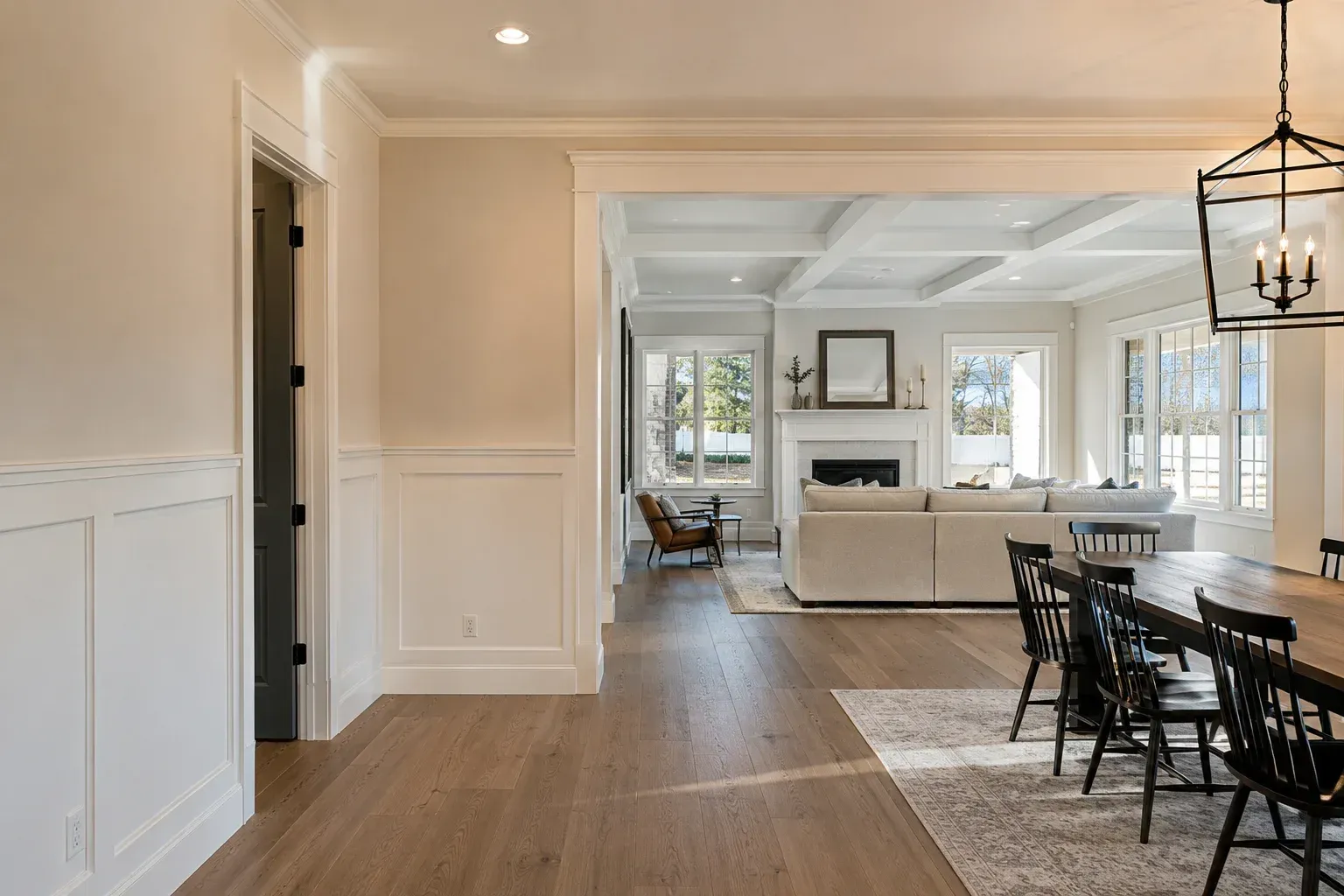
Wainscoting and wall paneling cover the lower portion of a wall, often in dining rooms, entries, and stairways. Board and batten and picture-frame styles are both common in Southern Utah homes.
Specialty trim includes window sills, chair rail, shiplap accents, and beam wraps. These are usually priced per project rather than per foot.
Many homeowners combine trim upgrades with related finish work like accent walls, fireplace surrounds, or built-in shelving, since having a crew on site once is more efficient than scheduling separate visits. You can see how these pieces fit together on our finish carpentry page for the St. George area.
How Trim Affects a Home's Appearance and Value
Trim does a quiet job. It hides the seams where drywall meets floors, doors, and ceilings, and it gives rooms a finished, deliberate look. Swapping thin builder-grade trim for wider, well-proportioned profiles is one of the smaller-budget changes that visibly upgrades a space.
On the value side, remodeling cost studies consistently place interior finish upgrades among the projects that recover a healthy share of their cost at resale, though exact returns vary by home and market. Real estate agents in the St. George area often point to millwork and finish details as things buyers notice during showings. None of this means trim guarantees a higher sale price. It means well-executed finish work rarely works against you, while sloppy trim with visible gaps and rough joints can.
The Risk of Cutting Corners
The main pitfall with trim is hiring based on price alone. Poorly installed trim shows every flaw: open miters, uneven reveals, wavy runs, and caulk doing the job a saw should have done. Fixing bad trim usually means tearing it out and starting over, which costs more than doing it right the first time.
Getting an Accurate Estimate for Your Project
General ranges are useful for planning, but the only number that matters is the one attached to your house. When you request bids, ask for:
- A written scope listing rooms, trim types, and profiles
- Material specifications (MDF, pine, or a named hardwood)
- Whether prep, caulking, filling, and finishing are included
- Proof of licensing and insurance
- A rough timeline
Free estimates are standard in this trade, so there is no cost to getting a real number before you commit. Comparing two or three detailed bids side by side tells you far more than any online calculator.
Conclusion
Custom trim work in St. George generally runs $6 to $20 per linear foot installed, with material choice, design complexity, labor, and site conditions deciding where your project lands in that range. MDF keeps costs down for painted trim, hardwoods cost more but bring natural character, and detailed profiles or older homes add labor time. Trim remains one of the more affordable ways to change how a home reads, and careful installation matters as much as the material you pick. The most reliable path to an accurate budget is a written, itemized estimate based on your actual home.
Ready to Put Real Numbers to Your Trim Project?
Ranges only get you so far. If you are weighing trim options for a remodel or a new build anywhere in the St. George area,
contact us for a free estimate. We will walk your space, talk through materials and profiles, and give you a clear written number so you can decide what fits your budget. No pressure, just information you can plan with.
Frequently Asked Questions
How much does it cost to trim a whole house in St. George?
For an average single-family home, full interior trim packages often range from $3,000 to $12,000 depending on square footage, trim types, and materials. Larger homes or detailed designs can exceed that.
Is MDF trim a bad choice?
Not at all. MDF is smooth, stable, and cost effective for painted trim. Its drawbacks are lower moisture resistance and softer edges, so it is less ideal for bathrooms, laundry rooms, or areas that take heavy impact.
How long does custom trim installation take?
A single room can often be trimmed in a day. A whole-home package usually takes several days to a couple of weeks, depending on the amount of trim, the complexity of the profiles, and whether finishing is included.
Does the type of siding on our home affect how we should approach maintenance in Utah's climate?
Yes, significantly. Timber siding needs sealing and regular repainting. Fibre cement is more durable but still needs paint maintenance. Vinyl needs less care but benefits from UV-protective cleaning in St. George's intense sun.
Should I hire a handyman or a finish carpenter for trim work?
A handyman may handle simple baseboard replacement fine. For crown molding, built-up casings, wainscoting, or anything with visible joinery, a dedicated finish carpenter is the safer choice because the precision requirements are higher.
Does new trim add value to my home?
Interior finish upgrades tend to recover a meaningful portion of their cost at resale, and clean millwork makes a strong impression during showings. Exact returns depend on your home, the quality of the work, and market conditions.
Do I need to remove my old trim first?
Most contractors handle removal and disposal, though it may appear as a separate line on the estimate. Removing it yourself can trim the bill slightly, but be careful not to damage drywall in the process.
What is the difference between finish carpentry cost and general carpentry cost?
Finish carpentry covers visible, detail-oriented work like trim, doors, mantels, and built-ins, so it is priced for precision. General or rough carpentry covers framing and structural work, which is priced differently and hidden behind finished surfaces.