A & L Finish Carpentry, LLC
How Do You Know If a Wobbly Handrail Needs a New Newel Post Instead of Just Tightening?
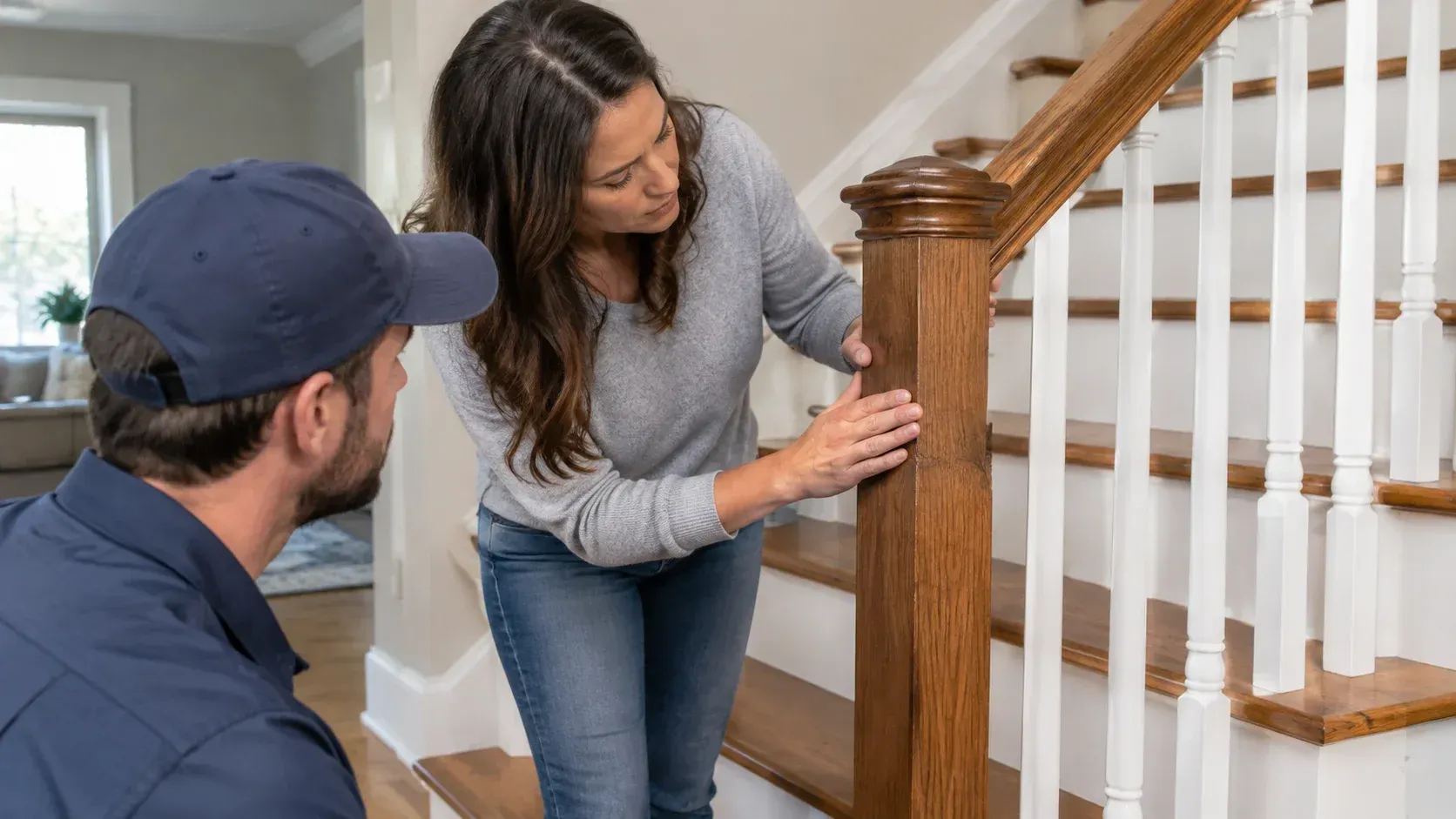
Table of Contents
- The Direct Answer: Tighten or Replace
- How a Newel Post and Handrail Work Together
- Simple Checks You Can Do at Home
- Signs a Newel Post Needs Replacing
- A Decision Framework
- A Hypothetical Example
- Common Misunderstandings
- What Typical Online Advice Overlooks
- Conclusion
- Questions About Your Wobbly Handrail?
- Frequently Asked Questions
Key Takeaways
- A wobbly handrail can be tightened when the newel post is solid and only a fastener or connection has loosened. It needs replacement or rebuilding when the post itself is cracked, rotted, or no longer holds a fastener.
- Where the movement happens tells you most of what you need to know. Movement at the floor points to the base connection, while movement only at the rail points to the rail bolt or fitting.
- A newel post that keeps coming loose after tightening usually has a hidden problem, such as stripped wood, a notched post, or weak framing below the floor.
- Handrails and guards are safety components, so a post that moves noticeably under normal hand pressure deserves attention sooner rather than later.
- Building codes and inspection rules differ by location, so major changes to a staircase should be checked with the local building department.
Introduction
A wobbly handrail needs only tightening when the newel post is solid and a bolt, screw, or rail connection has worked loose. It needs a new newel post, or a rebuilt base connection, when the post is cracked, rotted, split, or no longer holds a fastener, because tightening cannot fix wood that has lost its strength. The difference matters because a handrail is something people grab without thinking, often when they are off balance, and a post that gives way is a real fall risk for family members, guests, and customers.
For Shorewood homeowners and business owners, the question comes up often during Wisconsin's heating season, when dry indoor air shrinks wood and loosens connections that were tight in summer. Many people look for custom trim work professionals only after a tightening attempt fails and the post is wobbling again within weeks.
This article explains how newel posts are built, how to test where the movement comes from, which signs point to replacement, and what a sensible repair sequence looks like.
How a Newel Post and Handrail Work Together
What a Newel Post Does
A newel post is the large vertical post at the start, turn, or end of a staircase. It anchors the handrail, and the handrail ties the balusters, which are the smaller vertical spindles, into one system. When the newel post is secure, the whole railing behaves like a single rigid frame. When it moves, every connected piece moves with it.
How Newel Posts Are Attached
Most newel posts are attached in one of three ways. A post may be notched over the stair stringer and bolted through, set on top of the floor with a long bolt or lag screw into framing below, or built as a hollow "box" post around a structural core. The rail connects at the top through a rail bolt, a screw fitting, or a mortise joint.
Each method fails in a different way, which is why the same symptom, a wobble, can have very different causes and fixes.
Why Movement Develops Over Time
Wood expands in humid weather and shrinks in dry weather. In a cold climate like Wisconsin's, heated indoor air in winter can be quite dry, and seasonal shrinkage gradually loosens joints and fasteners. Daily loads add up too, since people pull and lean on a newel post far more than most other parts of a staircase.
Simple Checks You Can Do at Home
Find Where the Movement Starts
Direct Answer: Push gently on the post and rail while watching and feeling each connection. Movement at the floor means the base connection is loose. Movement only where the rail meets the post means the rail fitting is loose. Movement in both places can mean more than one problem.
Look for Cracks, Splits, and Soft Spots
Check the base of the post and the area around the floor for cracks, splits along the grain, or dark staining that suggests moisture. Press a screwdriver tip lightly into the wood at the base. Wood that feels soft or crumbles is not safe to rely on.
Check the Floor Around the Base
Look for gaps between the post and the floor, lifted flooring, or squeaks near the post. If the floor itself flexes, the post may be fine and the framing beneath it is the real problem.
Test the Fasteners
If you can see a bolt head or can access the underside, check whether the nut or screw turns freely without tightening. A fastener that spins without gripping often means the wood around it has stripped out.
Signs a Newel Post Needs Replacing
The Post Is Cracked or Split
A crack that runs through the base or along a bolt hole weakens the post where it carries the most load. Glue and screws can help with small hairline checks, but a structural split generally means the post should be replaced.
The Wood Is Rotted or Water Damaged
Moisture damage is more common near exterior doors, in entryways, and on porch or deck stairs. Rotted wood does not hold fasteners and keeps deteriorating, so patching rarely lasts.
The Mounting Holes Are Stripped Out
When a lag screw or bolt has been tightened repeatedly, the wood threads can wear away. Larger screws or filler may offer a short-term fix, but a post that keeps loosening usually needs a better connection or a new post.
The Post Was Notched Too Deeply
Some older stair designs cut a large notch into the post to fit it over the stringer. If too much material is removed, the post is weak at the notch and tends to wobble no matter how often it is tightened.
The Framing Below Is Weak
Sometimes the post is sound but nothing solid sits beneath it. A new post bolted to a weak subfloor will wobble just like the old one, so any replacement should include adding proper blocking or framing support.
A Decision Framework
| What You Find | Likely Fix | Why |
|---|---|---|
| Rail fitting is loose, post is solid | Tighten or replace the rail bolt or fitting | Tighten or replace the rail bolt or fitting |
| Post moves at the floor, wood is solid, fasteners turn freely | Re-secure with an appropriate newel fastener kit or longer bolt | The base connection has loosened |
| Fastener spins without gripping | Repair the mounting area or rebuild the connection | Wood threads are stripped |
| Visible crack through the base | Replace the post | The structural section is compromised |
| Soft or rotted wood | Replace the post and address the moisture source | Rot continues after patching |
| Post is solid but the floor flexes | Add blocking or framing, then re-secure | Weak support underneath |
Ask three questions in order. Is the wood sound? Is the connection salvageable? Is the support underneath strong enough? A "no" to any of them moves the answer from tightening toward replacement.
A Hypothetical Example
Consider a two-story home with a stained oak newel post at the bottom of the main staircase. The post wobbles slightly at the base, and the owner tightens the lag screw. It feels solid for a month, then loosens again.
On inspection, the carpenter finds that the original lag screw has stripped the wood threads, and the subfloor beneath the post has no blocking, only thin flooring over a joist gap. In this example, the right repair is not another round of tightening. It is adding solid blocking under the post and installing a new fastener system, with a replacement post only if the original is damaged.
This is an illustration, not a real client case, and actual repairs depend on how a specific staircase was built.
Common Misunderstandings
Common belief: If a post wobbles, it just needs a longer screw.
What is actually true: A longer screw only helps if there is solid wood or framing for it to grip. If the problem is stripped holes, a split post, or weak framing, a longer screw may hide the movement briefly while the underlying issue continues.
Why the distinction matters: A repair that feels tight for a few weeks can leave a safety problem in place longer.
Common belief: Wood glue and caulk can fix a loose base.
What is actually true: Glue and caulk may fill gaps or quiet minor creaks, but they do not carry load. Newel posts are held by mechanical connections, not by adhesive alone.
Why the distinction matters: A cosmetic fix can make a loose post look repaired while it remains unsafe.
Common belief: A little wobble is normal in older homes.
What is actually true: Older posts may have some movement, but noticeable play under normal hand pressure is not something to accept as a feature of age.
Why the distinction matters: Handrails are often used in moments of imbalance, and a post that moves can make a stumble worse.
What Typical Online Advice Overlooks
Most quick guides treat a wobbly handrail as a screw-tightening job. They rarely explain that the post can be the symptom rather than the cause, since a weak floor, a notched post, or a failed rail fitting can all produce the same wobble.
Another overlooked point is wood finish and matching. Replacing a post on a stained or painted staircase means matching species, profile, and finish to the existing balusters and handrail. That is one reason to read up on hiring a finish carpenter before choosing who does the work, and to look through a project gallery for examples of visible woodwork.
Codes are also rarely mentioned. In general, building codes expect handrails and guards to withstand substantial loads, and requirements can change when a staircase is altered. Wisconsin has its own residential construction rules for one- and two-family homes, and commercial properties follow different standards, so a Shorewood property owner should confirm current requirements with the local building inspector before making structural changes. This article does not replace that confirmation.
Finally, there is a difference between a loose handrail on an interior stair and one on an exterior porch or business entry. Exposure to freeze-thaw cycles, moisture, and heavier foot traffic can shorten the life of any connection, so exterior and commercial railings often deserve a more conservative approach to repair.
Conclusion
A wobbly handrail does not always need a new newel post. If the post is solid and the looseness comes from a fastener or rail connection, tightening or reinstalling the hardware can restore it. If the post is cracked, rotted, stripped out, deeply notched, or sitting on weak framing, replacement or a rebuilt connection is the more reliable path. Finding where the movement starts, checking the condition of the wood, and confirming what supports the post gives you a much clearer answer than simply tightening and hoping.
Questions About Your Wobbly Handrail?
If you are comparing newel post repair against replacement and want to talk through what you are seeing, you can
contact us
with questions about your staircase. A few photos of the post, the base, and the rail connection are usually enough to start the conversation. Our team is based in southern Utah, so it is worth confirming whether we can work in your area before planning a project, and this article is meant to help you decide on next steps, not to replace an in-person inspection.
Frequently Asked Questions
Is a wobbly handrail dangerous?
It can be. Handrails are grabbed when people are off balance, so a post or rail that moves noticeably under normal hand pressure should be inspected and repaired promptly rather than ignored.
Can I fix a loose newel post myself?
Simple cases, like a loose rail bolt or base fastener in solid wood, are sometimes manageable. Cracks, rot, stripped holes, or weak framing are better handled by an experienced carpenter.
Why does my newel post keep coming loose after I tighten it?
Repeated loosening often means stripped wood threads, a notched or cracked post, or weak framing beneath it. Tightening only helps when the wood and support are sound.
How long does newel post replacement take?
Many replacements take a few hours to a day, depending on the post style, access, and finish matching. Added framing work or custom finishing can extend the timeline.
Do I need a permit to replace a newel post?
Often a like-for-like replacement does not, but structural stair changes may. Rules vary by location, so confirm with your local building department before starting.