A & L Finish Carpentry, LLC
Why Do My Stairs Creak in the Same Spot Every Time I Step There?
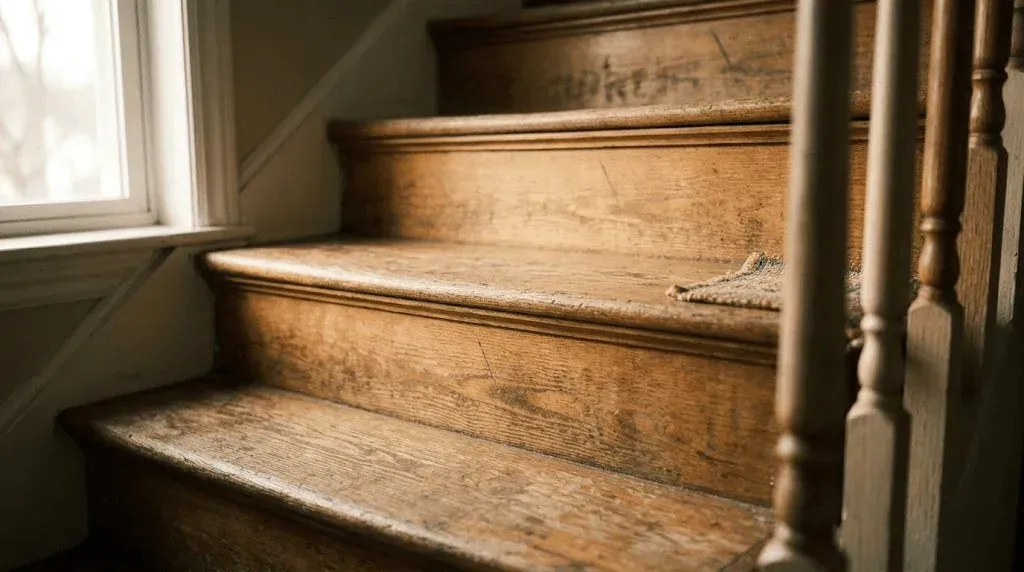
Table of Contents
- Introduction
- What a creak actually is
- Why one spot and not the whole staircase
- How a staircase is put together, and what comes loose
- What the location of the creak tells us
- Why southern Utah's dry air makes it worse
- Whether we can reach the underside changes everything
- The repairs that last, and the ones that come back
- When a creak is telling you something structural
- What we look at on a stair visit
- Conclusion
- Request a Stair Inspection and Squeak Diagnosis in St. George, UT
- Frequently Asked Questions
Key Takeaways
- A creak that happens in one exact spot almost always means a single joint has worked loose at that point, usually a tread separating slightly from its riser or stringer. It is not the whole staircase wearing out evenly.
- The noise is friction. Wood rubbing against wood, or a tread sliding along the shank of an old nail, as the joint opens and closes under your weight.
- Where on the tread it creaks narrows the cause. Front edge, back edge, middle, and the side nearest the wall each point at a different loose connection.
- Nails are the usual culprit. A smooth nail shank loses its grip as wood shrinks and swells, which is why stairs that were quiet for years start talking.
- If the underside of your stairs is open, the repair is done from below, it lasts longer, and nothing shows on the finished side.
Introduction
A staircase that creaks in the same spot every single time means one connection has worked loose right there. Most often a tread has separated slightly from the riser or the stringer beneath it, so when you put weight on that spot the tread flexes, the joint closes, and two surfaces rub. Step to either side of it and the stair is silent, because those joints are still tight. That localized pattern is genuinely useful information, and it is the reason our custom stair and railing work so often starts with a repair rather than a rebuild.
The good news is that a single creaking spot is usually a small, contained fix. The less good news is that it will not resolve itself, because the movement that caused it keeps happening every time someone uses the stairs.
Here is what is actually moving under your foot, how to read the symptom, and what separates a repair that holds from one that comes back next season.
What a Creak Actually Is
A creak is friction, not a sign that timber is somehow crying out with age. Something is sliding against something else, and the sound is that movement amplified by the hollow space under the staircase.
There are only a few things it can be. Wood rubbing directly against wood where two pieces have separated slightly and now touch, then part, then touch again. A tread sliding along the shank of a nail that has lost its grip. A loose wedge or glue block shifting in its pocket. Occasionally a fastener working against a metal bracket.
That is why the sound is so specific and so repeatable. You are loading the same joint the same way, and it moves the same distance every time. A staircase that creaks everywhere, faintly, is a different situation from one that has a single loud spot on the fourth tread, and it points somewhere different.
Why One Spot and Not the Whole Staircase
A staircase is not one object. It is a series of separate joints, and each of them is independently either tight or loose.
Every tread meets a riser at the front, meets another riser or a backer at the rear, and lands on stringers at each side and sometimes in the middle. On a set of thirteen stairs, that is dozens of individual connections. When one of them loses its grip, that one step gets a voice and the others stay quiet.
Which is why the single-spot pattern is reassuring rather than alarming in most cases. It tells us the assembly as a whole is still doing its job and one joint needs attention. Widespread creaking across most of the flight is the pattern that suggests something more general, such as a stringer that has moved or a staircase that was never properly fastened or glued in the first place.
How a Staircase Is Put Together, and What Comes Loose
To follow the repair, it helps to know the parts. The treads are the horizontal boards you step on. The risers are the vertical boards between them. The stringers are the long angled members at each side carrying the whole flight. Skirt boards and trim cover the joint where the stairs meet the wall, which is part of why we handle baseboards, casing and trim alongside stair work.
On better-built stairs, the treads sit in routed pockets in the stringers and are held tight by tapered wooden wedges driven in from underneath, then reinforced with triangular glue blocks in the corner where tread meets riser. On simpler stairs, treads and risers are nailed or screwed together and to cut stringers.
The things that come loose, in rough order of how often we find them:
Nailed joints, because a smooth nail relies purely on friction against the wood fibres. As the wood shrinks and swells across the seasons, that grip fades and the tread starts to move on the nail.
Glue blocks, which dry out, lose adhesion, and drop off. Sometimes you find them lying under the stairs.
Wedges, which shrink slightly and no longer hold the tread firmly in its pocket.
Tread-to-riser separation at the front nosing, where the greatest flex happens because that is where feet land.
What the Location of the Creak Tells Us
We ask people to stand on the stair and find exactly where it speaks, because the position narrows the cause considerably.
If it creaks when you step on the front edge, the tread has usually separated from the riser below its nosing. That front joint takes the most load and the most flex, so it is the most common single failure.
If it creaks at the back of the tread, closer to the next riser up, the joint at the rear has opened or the riser itself is loose.
If it creaks in the middle and feels slightly springy, the tread is flexing more than it should. That can mean it has come away from a centre stringer, or that the span is unsupported, or occasionally that the tread material is thinner than it should be.
If it creaks near the wall, the tread has lost its connection to the stringer on that side, and the skirt board may be hiding a gap that has opened up.
If the handrail or a baluster moves when the stair creaks, that is a different conversation and we treat it as a priority, because that is a safety component rather than a comfort one.
Why Southern Utah's Dry Air Makes It Worse
Wood moves with moisture, and our climate here gives it a lot to react to. Very low humidity for much of the year, big seasonal swings, and heated indoor air in winter all pull moisture out of interior woodwork.
As a tread gives up moisture it shrinks a little across its width. Multiply that across a whole flight and every nailed joint loosens slightly. This is why a staircase can be silent for years and then develop a creak, and why creaks often show up or get louder at a particular time of year, then ease off.
It is also why material choice matters more here than in a humid climate, and why our stair page commits to using quality hardwoods suited for Utah's climate so stairs will not squeak, warp, or shift. Species, moisture content at installation, and how the joints are made all determine whether a staircase stays quiet through its second decade. A stair built with adhesive and mechanical fastening in properly acclimated hardwood behaves very differently from one that was nailed together quickly in green material.
Whether We Can Reach the Underside Changes Everything
The single biggest factor in how we repair a creak is whether the back of the staircase is accessible.
If the underside is open, typically in an unfinished basement or a utility space, we work from below. That is the better repair by a wide margin. We can see exactly which joint is moving, close the gap, add or replace glue blocks, re-drive or replace wedges, and add fastening where it belongs. Nothing shows on the finished side, and the treads you look at every day are untouched.
If the underside is closed in with drywall, the repair happens from above. That is entirely workable, it just requires more care. Screws are placed and countersunk into the tread, driven into the riser or stringer below to pull the joint closed, then filled or plugged. On carpeted stairs this is straightforward because the carpet hides everything afterward. On exposed hardwood treads it becomes finish work, where the plug has to match grain and the finish has to blend, and that is where a finish carpenter earns the difference over a general handyman.
Tell us which situation you have when you call. It changes the approach, the timeline, and the price.
The Repairs That Last, and the Ones That Come Back
The fixes that hold all share one thing: they close the joint and then hold it closed mechanically, with adhesive doing the rest.
The ones that come back tend to be these. Talcum powder or a lubricant puffed into the gap quiets the noise for a few weeks by reducing friction, and in the process it contaminates the joint so adhesive will never bond there properly again. Shims tapped into a gap without adhesive work loose and drop out. Construction adhesive squirted blindly into an open gap fills the space but does not pull anything tight, so the joint stays open and just creaks against cured glue instead of wood. Face-nailing a tread down with finish nails is often what a previous owner did, and it is usually why the stair still creaks now.
Overdriven screws deserve their own mention. Too much torque in hardwood splits the tread or strips the hole, and a stripped hole holds less than the nail you replaced.
None of this is exotic work. It is just work that has to be done in the right order: find the moving joint, close it, fasten it, then make it invisible.
When a Creak Is Telling You Something Structural
Most creaks are a nuisance. A few are a signal, and these are the ones worth calling about sooner.
A tread that visibly deflects or feels spongy under normal weight. A gap between tread and riser that you can see, and that changes width when someone stands on it. A stringer pulling away from the wall or from the skirt board. Any movement at all in a handrail, guard, baluster, or newel post. A creak that appeared suddenly rather than developing gradually, especially after water damage or a leak nearby.
We also treat basement and garage stairs with extra attention, because they are frequently the least finished and most heavily loaded flight in a house, and because they are often the ones people carry laundry and boxes down.
Leaving a genuinely loose joint alone has a cost beyond the noise. The joint keeps working, the fastener holes enlarge, the gap widens, and what would have been a single-joint repair becomes several. On exposed hardwood, repeated flexing at the nosing can crack the finish along that edge, which turns a structural repair into a refinishing job as well.
What We Look at on a Stair Visit
When we come out for a creak, we are diagnosing rather than guessing. We load each tread and locate exactly which joints move and where on the tread they move. We check whether the underside is accessible and what that allows. We look at the existing fastening to understand how the stair was built and why the joint failed. We check the rise and run for consistency, since an uneven step is a trip hazard independent of any noise. And we check the handrail, guards, and newel posts, because those are the safety-critical parts of a staircase and they are easy to overlook when the complaint is a squeak.
Then we tell you what is actually wrong, whether it is a one-joint repair or something broader, and what it will take. If the honest answer is that the flight is worth rebuilding rather than repairing, we say that too, along with what you would gain. You can see examples of finished stair and railing work in our project gallery.
Conclusion
A stair that creaks in one repeatable spot is one loose joint, most often a tread that has parted slightly from its riser or stringer. The location of the noise on the tread narrows the cause, the dry southern Utah climate explains why nailed joints let go over time, and whether the underside is accessible determines how the repair gets made.
What it will not do is settle down on its own. The movement that causes the sound is the same movement that keeps enlarging the fastener holes, so the repair only gets larger the longer it waits. In most homes this is a contained job with nothing visible left behind afterward.
Request a Stair Inspection and Squeak Diagnosis in St. George, UT
If a step in your house has developed a voice, we are happy to come find it. We serve St. George along with Hurricane, Ivins, La Verkin, Rockville, Santa Clara, Toquerville, and Washington, and we are a licensed and insured finish carpentry company offering a one-year warranty on our custom work, as noted on our
FAQ page. Call (435) 429-1231 during business hours, Monday to Friday, or
get in touch and tell us which stair it is, roughly where on the tread it creaks, and whether the underside of your staircase is open or finished. Those three details tell us most of what we need before we arrive. Our
finish carpentry work across St. George covers repairs as readily as new builds.
Frequently Asked Questions
Why does only one stair creak and not the others?
Because a staircase is dozens of separate joints, each independently tight or loose. One tread has usually separated slightly from its riser or stringer at that point, so it flexes and rubs under load while every other joint stays firm and silent.
Is a creaking stair dangerous?
Usually it is a nuisance rather than a hazard. It becomes a concern if the tread visibly flexes, a gap opens and closes under weight, a stringer is pulling away, or anything moves in the handrail or balusters. Those warrant prompt attention.
Can I fix a squeaky stair with powder or lubricant?
It quiets the noise briefly and makes the proper repair harder, because it contaminates the joint so adhesive will not bond there afterward. The lasting fix closes the loose joint and fastens it, rather than reducing the friction inside it.
Do you have to remove carpet or damage the treads to fix a creak?
Not if the underside of the staircase is accessible, in which case we work from below and nothing shows. Where the underside is finished, the repair is made from above and then filled or plugged, which carpet hides completely.
Why did my stairs start creaking after years of being quiet?
Wood gives up moisture in our dry climate and shrinks slightly, which loosens the grip of smooth nails that were holding treads to risers. Creaks often appear or worsen seasonally for this reason, then ease as humidity changes.