
A & L Finish Carpentry, LLC
What's the Difference Between MDF and Solid Wood Trim in Hurricane, Utah?
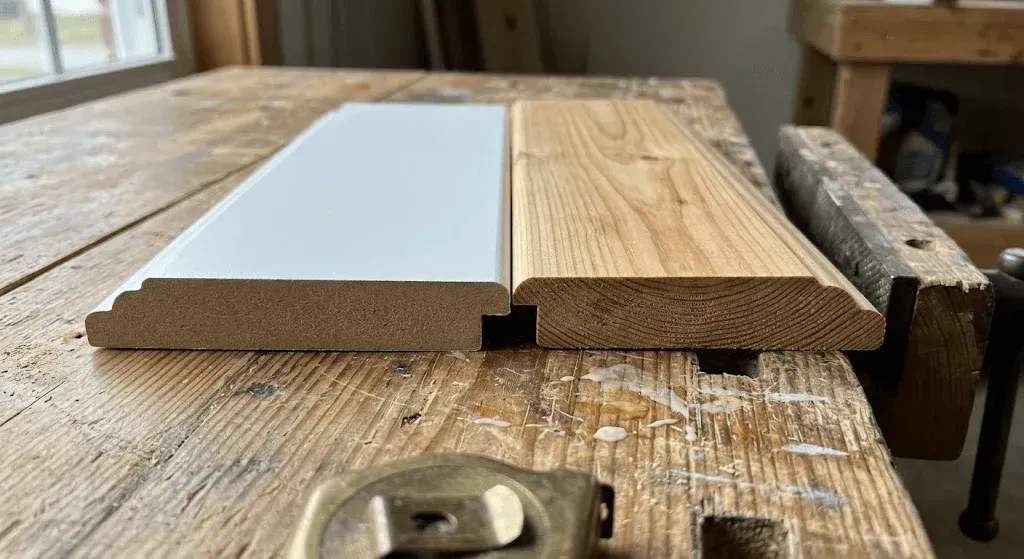
Table of Contents
- What Separates MDF from Solid Wood Trim
- How Each Material Is Made
- Cost Comparison
- Durability and Moisture Resistance
- Appearance and Finish Options
- Conclusion
- Choosing the Right Trim Material in Hurricane, Utah?
- Frequently Asked Questions
Key Takeaways
- MDF is an engineered wood product made from compressed wood fibers and resin, while solid wood trim is milled directly from a single piece of lumber, and this difference in composition drives nearly every other distinction between them.
- MDF costs roughly 30 to 50 percent less than solid wood and holds paint more evenly, but it is more vulnerable to moisture damage and cannot be stained to show natural grain.
- Solid wood trim costs more upfront and can expand or contract slightly with temperature changes, but it holds up better in high-moisture areas and can be repaired or refinished over time.
- Neither material is universally better. The right choice depends on the room, the finish you want, and how much of the budget is allocated to trim versus other parts of a project.
- In a hot, dry climate like southern Utah, both materials perform reasonably well indoors, though moisture-prone rooms and exterior applications still favor solid wood or moisture-resistant alternatives.
What Separates MDF from Solid Wood Trim
MDF, or medium-density fiberboard, is an engineered material made by compressing wood fibers with resin under heat and pressure, while solid wood trim is cut and milled from a single piece of natural lumber such as pine, oak, or alder. That difference in how each material is made explains why MDF is smoother and cheaper but more moisture-sensitive, while solid wood costs more but holds up to wear, refinishing, and humidity in a way engineered board cannot. For homeowners planning custom trim work in Hurricane or elsewhere in southern Utah, this decision affects budget, long-term maintenance, and how a room looks once painted or stained.
The two materials are not interchangeable substitutes. They are built for different priorities, and picking the wrong one for a specific room is one of the more common regrets homeowners run into after a remodel.
The sections below walk through how each material performs across the factors that actually matter when trim goes into a home.
How Each Material Is Made
MDF: An Engineered Wood Product
MDF starts as raw wood fibers, often leftover sawmill material, that get broken down, mixed with wax and resin binders, then compressed under high heat and pressure into dense, uniform panels. There is no grain direction and no natural knots or imperfections, which is part of why it machines and paints so cleanly.
Solid Wood: Milled From a Single Board
Solid wood trim is cut directly from lumber, then shaped into profiles using a router or molding machine. Because it comes from a living tree, it carries natural grain, occasional knots, and some variation in density from board to board. This is also why solid wood can be sanded, stained, and refinished repeatedly over its lifespan.
MDF is manufactured for uniformity and cost efficiency, while solid wood retains the natural characteristics and repairability of the tree it came from. This manufacturing difference is the root cause of nearly every practical distinction between the two materials.
Cost Comparison
Material cost is usually the first factor homeowners ask about, and it is also where the gap between MDF and solid wood is most consistent.
| Factor | MDF | Solid Wood |
|---|---|---|
| Typical material cost | Lower, often 30 to 50 percent less | Higher, varies by species |
| Cost driver | Manufacturing consistency | Lumber sourcing, species, grain quality |
| Waste during installation | Low, uniform panels cut cleanly | Can be higher with knots or defects |
| Long-term cost | Lower upfront, may need earlier replacement in wet areas | Higher upfront, longer usable lifespan with care |
A full-home trim package using MDF can save a meaningful amount compared to hardwood, which is one reason MDF has become the standard choice for painted baseboards and casings in new construction across Washington County. Solid wood costs more per linear foot, but the price difference narrows somewhat when a project only needs trim in a few rooms rather than an entire house.
Durability and Moisture Resistance
How MDF Handles Wear and Moisture
MDF is dense and resists denting reasonably well, but it does not tolerate sustained moisture. If water sits against MDF trim, such as from a leaking window, a plumbing issue, or condensation, the material can swell and lose its shape permanently. Unlike solid wood, MDF generally cannot be sanded down and repaired once this happens.
How Solid Wood Handles Wear and Moisture
Solid wood trim holds up better in areas with occasional moisture exposure, and minor damage like dents, scratches, or small water marks can often be sanded out and refinished. Solid wood does expand and contract slightly with seasonal humidity and temperature shifts, which can create small gaps at joints over time, particularly in homes with wide indoor temperature swings.
Why This Matters More in Some Rooms Than Others
Bathrooms, laundry rooms, and areas near exterior doors see more humidity and splash exposure than a living room or hallway. This is one of the clearer situations where the "better" material genuinely depends on where it is going, not on which material is objectively superior overall.
Appearance and Finish Options
MDF has no visible grain, which makes it excellent for painted trim where a perfectly smooth, seamless look is the goal. It cannot be stained convincingly, since there is no wood grain underneath to show through. Attempting to stain MDF typically results in a flat, blotchy appearance that does not resemble real wood.
Solid wood can be painted or stained, giving it more flexibility for homeowners who want the natural texture of decorative beams, stained casings, or tongue and groove paneling rather than a uniform painted surface. The visible grain does mean solid wood trim shows more natural variation from piece to piece, which some homeowners prefer and others find less consistent than MDF's uniform surface.
Conclusion
MDF and solid wood trim differ primarily because of how each material is made: MDF is engineered from compressed wood fibers for a smooth, paintable, budget-friendly surface, while solid wood is milled from natural lumber and offers greater durability, repairability, and the option to stain. MDF works well for painted trim in most living spaces, while solid wood is generally the stronger choice for moisture-prone rooms, high-traffic areas, or anywhere a stained, natural finish is the goal. The right material ultimately depends on the specific room, budget, and long-term maintenance expectations for that part of the home, rather than a single answer that applies to an entire project.
Choosing the Right Trim Material in Hurricane, Utah?
If you are weighing MDF against solid wood for a remodel or new build in Hurricane or the surrounding area,
our finish carpentry team can walk through which material makes sense room by room based on moisture exposure, finish preference, and budget. You are welcome to
contact us with questions or to request a written estimate before deciding anything. There is no pressure attached, just information to help you plan.
Frequently Asked Questions
Can MDF trim be stained to look like wood?
Not effectively. MDF has no wood grain, so stain sits on the surface unevenly and does not resemble real wood. MDF is intended for painted finishes rather than stained ones.
Is solid wood trim worth the extra cost?
It depends on the room and your goals. Solid wood costs more but offers better repairability and moisture resistance, which can matter more in bathrooms or high-traffic areas than in a rarely used hallway.
Does MDF trim hold up in bathrooms?
Standard MDF is not well suited to consistently humid or wet areas, since prolonged moisture exposure can cause it to swell. Solid wood or moisture-resistant materials are generally a better fit for bathrooms.
Can I mix MDF and solid wood trim in the same house?
Yes, this is a common approach. Many homeowners use MDF for painted trim throughout most rooms and reserve solid wood for stained accent pieces or moisture-prone spaces.
Does the dry Utah climate affect trim material choice?
It can. Southern Utah's low humidity is generally easier on both materials indoors, though solid wood may show minor gapping at joints during the driest months, which is a normal characteristic rather than a defect.